Design for the real world
-Victor Papanek-

The Royal Academy of Art in The Hague is launching INSIDE, an entirely new Master Interior Architecture in September 2011. This internationally orientated course is a meeting place where students, designers, theoreticians, architects and critics participate on broadening and deepening the content of...

Inter

image

Studio led by Jan Konings

In a corner of the supermarket, there is a coffee-maker from which shoppers can pour free cups of coffee. It’s always busy there. Despite the popularity of this service, no tables or chairs are provided. The coffee corner could be the central meeting-point in the...

Space

image

Studio led by Anne Holtrop

Cy Twombly and Robert Morris made drawings blind, the Situationists walked (drifted) randomly through the city, Douglas Huebler picked arbitrarily an area on a map and asked people to walk there and make photos whenever they thought of some words given by him, Vito Acconci...

Urban

image

Studio led by Elma van Boxel and Kristian Koreman

Design Research, from Agora to Shopping Mall.
The traditional European city, as shown so marvellously in the Nolli map of Rome, is a finely-tuned construct of private and public space: public and private as mould and counter-mould. To put it more...

Flows

image

Research group led by Jan Jongert

Contemporary interiors increasingly depend on a complex of connecting flows.
The researchgroup 'inside flows' investigates the specifications and behaviour of these flows to support the development of sustainable designmethods.

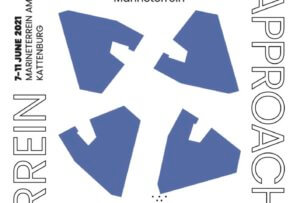
TRAVEL 

A SYMPOSIUM AND DINNER
ABOUT INNOVATIVE APPROACHES TO
SPATIAL DESIGN AND
INTERIOR ARCHITECTURE


Enter INSIDE Magazine

We are proud to present the first issue of our magazine Enter INSIDE. With contributions by students, teachers, architects and designers connected to INSIDE, the magazine gives you insight into what it means to design for the real world. Designed by Roosje Klap this first issue is devoted to the experience of travel. Through interviews by our students with designer Jan Konings and artist Kyong Park we learn about the importance of travelling. As Hans Venhuizen (teacher of the Travel program) describes: “Only by travelling somewhere you can see and feel the real spaces, smell the real odours and meet the real people. And there is a lot to see and feel everywhere.”


Lecture by Krijn de Koning

20 March 2012

Marieke Ladru

Dutch artist Krijn de Koning is known for his intricate site-specific installations. Last Tuesday the inspiring builder spoke to a room filled with interior architecture students about his art, motives and design process.

Krijn de Koning, Installation Hasselt (Belgium), 2009, courtesy Demisch Danant and the artist


Architecture and space play an important role in his practice. A lot of his works can be described as rooms within rooms – always related to and conditioned by their material surroundings. These interventions create a different view and experience of the existing place. To Krijn its important that the viewer is not only visually involved with the work, but also physically. By adding passages or places to sit he creates attention to the structure of his pieces. It triggers the visitor to experience reality as it is, to be aware of his surroundings and movements through the space.

Musée des Beaux-arts de Nantes (France)


Most of his installations are temporal. For example the very complex structure he made for the Musée des Beaux-arts de Nantes (France). The work was supposed to be in the courtyard of the building. A charged, almost sacral space. All corridors in the building lead to this classical sanctuary, constructed to organize and draw attention. To create something in the centre would instigate too much credit or value, according to Krijn. So he decided to add something to disrupt these monumental surroundings and with that also the anticipations of the museum visitor. The result was a maze that changed at every corner: a web of corridors, spaces, windows and passages woven through the inside and outside of the building. In it he placed small sculptures. The visitor never knew what to expect. There was no centre, no point from where you could get an overview or from which you’d be able to consider the work as a whole. The installation was demolished after a month. Today there are only models, drawings and pictures left of the project.

The Nantes installation was completely white. However – Krijn as you can see in the pictures – often uses color. He employs color as a tool: a means to direct or block. Like his materials and finishing, these choices are based on intuition. During our diner conversation he told the students of the Inside program more about this process. One example he gave, came from the early days of his career, when he was a resident at de Ateliers in Amsterdam (an institute established by artists to stimulate the development of young and upcoming artists). Here he created a large sculpture built out of driftwood he collected from the streets. One of these pieces was an old cupboard door. Attached to it was a spare key. The previous owner probably taped it on the inside, so he or she wouldn’t lose it. Krijn used the piece of wood without further processing, exactly the way he had found it. Thus the key became a part of the sculpture. The artist didn’t expect that the key would become a focus point. However, to Krijn the key was not important, it was just there. But a lot of spectators saw it as the “key” to understanding the piece. In the end Krijn removed it. The story shows that as an artist you can’t fully control the way your work is perceived. The way we look at art is highly conditioned: people want to completely understand and theorize everything they see in an art piece, instead of sometimes just experiencing it. Krijn is not someone to overanalyse or theorize his works. As mentioned before, much of his practice is defined by intuition and pragmatics. He activates viewers to experience space and architecture in a different way. To question how we bestow value and meaning to what we see, whether it is an art piece by Mondriaan or a medieval kitchen.

Abbey de Corbigny (yellow) 2006 Corbigny (France)


Visiting tip: the ruins of the old “mini Walcheren” at the city park Molenwater in Middelburg

A TEMPORARY PAVILLION FROM WOODEN PALLETS

In Denmark, the Arrhus school of architecture, 9 students designed and built ‘Be Paletto’, a temporary pavillion wooden pallets. The pavillion was meant to become an active element in the everyday-life of the school, and not to be only an object.

Be Palleto! / the movie from Thibault Marcilly on Vimeo.

THE SYMPOSIUM, INSIDE DIALOGUES.

The symposium, INSIDE Dialogues, started in a warm atmosphere after a lunch, in a large room of KABK filled with copies of ancient ruins. It was quite an odd setting where one comes from Egypt another from Greek, but then it somehow reflected the study consists of three discrete studios with each distinct approach. Structured in three parts, each part of the symposium started with a short introduction of each studio’s theme followed by a guest’s lecture.


After Hans Venhuizen’s introduction, Jan Jongert started the first part, presenting the idea of “flows” with a number of examples. He explained how design process can be started by an analysis of our surroundings in terms of flows and then developed in direction of improving those flows. Kyong Park then introduced APAP(Anyang Public Art Project, Korea) which he directed in 2010. He challenged this city-sponsored program aimed at re-branding of the city, asking artists to focus on intervening existing lives of people there rather than making art objects. If we view the project in terms of flows, we find that the project was focused on a rather unmeasurable layer beyond flows, which, I personally think, raised a valuable question on the inevitably abstract nature of the approach through flows.

A study of flows, 2012Architects


Raumlabor’s project in APAP 2010

INTRODUCTION WORKSHOP: BIKING IN AMSTERDAM

The introduction week ended with a day trip to Amsterdam. We biked through spots, buildings and whole neighborhoods of architectural interest and visited places such as the Stedelijk museum and de Appel. Guided by architect and teacher of the program Anne Holtrop, got a great foretaste of Dutch design and contemporary art in the Netherlands.

Chicako Watanabe’s installation in Lloyd Hotel
In the size of a family room in the former Lloyd Hotel of the 1920′ s. Families stayed there before setting off to South America

The Scheepstimmermanstraat, famous for its 60 unique houses designed by different architects.

a raft made of reused coca cola crates and bottles creates a “back yard” for one of the houses

Blok K by NL Architects: a stunning green roofed building with light filled apartments. It is part of a masterplan of 500 dwellings and a park between the historic center and the recently redeveloped harbor area in the east of Amsterdam.

exhibitions of industrial and applied design, contemporary art and works of the famous Dutch graphic designer Wim Crouwel in the Stedelijk museum.

After the full bike tour had drinks on a deck in one of Amsterdam’ s canals

ANT WORKS

Chair that was made by tracking an Ant

  • Inside News

  • Recent Articles

  • Inside Tweet